
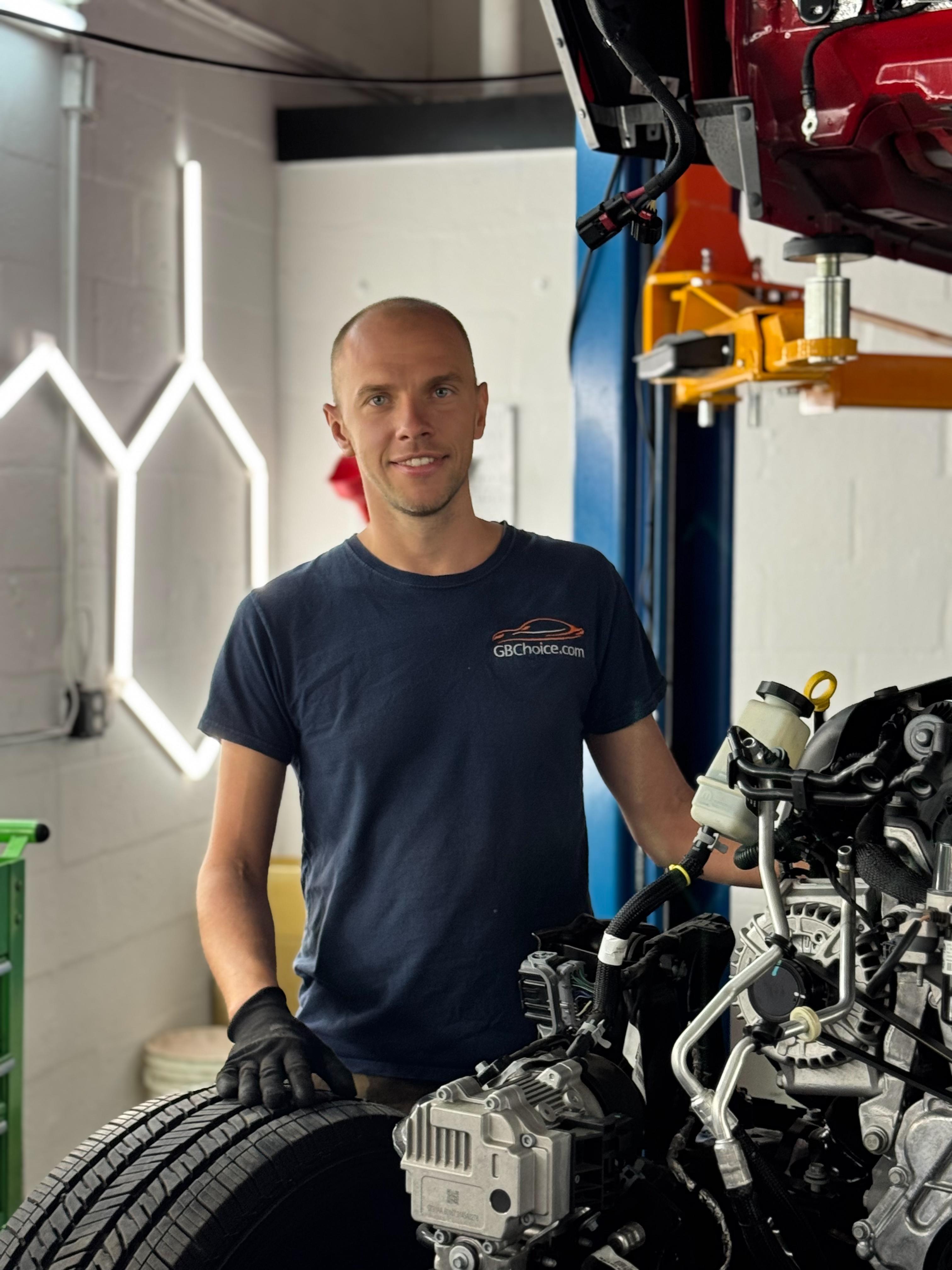
The U.S. rebuilt vehicle market processes millions of cars every year, yet despite its enormous scale, there is still no unified national standard governing how damaged vehicles should be restored, verified, documented, and presented to consumers.
For entrepreneur Vitalii Tkachenko, this gap is not simply an operational inefficiency — it is one of the largest structural weaknesses in the entire rebuilt vehicle industry.
Tkachenko is the founder of RTQP, a developing verification and certification framework designed to introduce standardized restoration quality controls, documentation systems, and transparency infrastructure into the rebuilt vehicle market.
Unlike traditional dealership procedures or fragmented state-level inspections, RTQP aims to create a scalable operational system capable of functioning across dealerships, rebuilders, inspectors, and consumers.
In this interview, Tkachenko explains why the current system no longer works at market scale, why transparency has become a critical economic issue, and why he believes rebuilt vehicle verification will eventually evolve into an industry-wide standard.
“The market became massive, but the standards never evolved with it”
Q: What made you start working on RTQP?
Vitalii Tkachenko:
I spent years operating inside the rebuilt vehicle market and saw the same problem repeatedly. The industry itself is enormous — millions of vehicles are rebuilt and reintroduced into circulation every year — but the systems responsible for verifying restoration quality remain fragmented and inconsistent.
What exists today is mostly title classification and minimal inspection requirements. Those systems were never designed to create true transparency or standardized quality verification.
The market became larger, more digital, more interconnected — but the underlying standards did not evolve with it.
That creates risk for consumers, inefficiency for businesses, and a lack of trust across the entire ecosystem.
“The issue is not rebuilt vehicles themselves”
Q: Many people still associate rebuilt vehicles with risk. Is the rebuilt market itself the problem?
Vitalii Tkachenko:
No. The rebuilt market is not the problem.
In many ways, rebuilt vehicles are an important economic and environmental solution. They make transportation more affordable and extend the lifecycle of vehicles that would otherwise be prematurely discarded.
The real issue is the absence of standardized restoration verification.
Today, there is no unified national methodology explaining:
- how restoration quality should be documented,
- how critical components should be verified,
- what information buyers should receive,
- or how transparency should be maintained across the process.
That creates inconsistency.
Some businesses operate responsibly and professionally. Others operate with minimal structure. Consumers often cannot distinguish between the two.
“RTQP is designed as infrastructure, not just software”
Q: So what exactly is RTQP?
Vitalii Tkachenko:
RTQP is a standardized operational framework designed to verify, document, and structure the rebuilt vehicle restoration process.
It combines:
- inspection workflows,
- verification procedures,
- digital documentation,
- buyer transparency systems,
- and quality-control governance.
A major part of the system is the digital platform infrastructure currently being developed around the protocol.
Dealerships and rebuilders will be able to upload restoration documentation, diagnostics, photos, repair summaries, and verification data into a centralized system tied to the vehicle VIN.
After verification, the platform generates standardized certification reports and buyer disclosure documentation.
Consumers will then be able to access vehicle verification information through the platform itself.
The goal is not simply to create another dealership tool. The goal is to create scalable transparency infrastructure for the rebuilt vehicle industry.
“This is already happening in the market”
Q: Is RTQP still at the idea stage?
Vitalii Tkachenko:
No. RTQP is already being implemented by multiple independent automotive businesses operating across different segments of the industry.
The system is currently being used within dealerships, repair facilities, diagnostics operations, and related automotive businesses.
That’s important because it demonstrates something critical: the protocol is transferable across different business models and operational environments.
We are no longer discussing a hypothetical concept. We are validating implementation in real commercial conditions.
“The future of the industry will be standardization”
Q: Why do you believe the industry is moving in this direction now?
Vitalii Tkachenko:
Because the market conditions are forcing it.
New vehicles continue to become more expensive. Consumers are increasingly turning toward used and rebuilt vehicles. At the same time, buyers are demanding more transparency, more accountability, and more verifiable information.
You also have growing regulatory attention around consumer protection, documentation, and safety.
Eventually, industries of this size begin moving toward standardization naturally.
You can see this pattern in finance, manufacturing, logistics, healthcare — and I believe the rebuilt vehicle market is entering that same phase.
“The long-term goal is larger than one company”
Q: What is your long-term vision for RTQP?
Vitalii Tkachenko:
The long-term vision is not to create a dealership advantage for one company.
The goal is to contribute to the creation of a scalable industry framework that improves transparency, strengthens consumer trust, and supports higher operational standards across the rebuilt vehicle market.
I believe the industry needs infrastructure-level systems that connect economic efficiency, compliance, safety, and consumer confidence.
That is the direction RTQP is intended to move toward.
Final Thought
As the rebuilt vehicle market continues to expand across the United States, initiatives like RTQP reflect a broader shift occurring within the automotive industry itself — from fragmented operational practices toward scalable systems of verification, transparency, and standardization.
Whether RTQP ultimately evolves into a widely adopted industry framework remains to be seen.
But one thing is already clear: the conversation around rebuilt vehicles is beginning to change.
December 20, 2025
Anthony Young